






How Far Can the Dodge Durango Drive
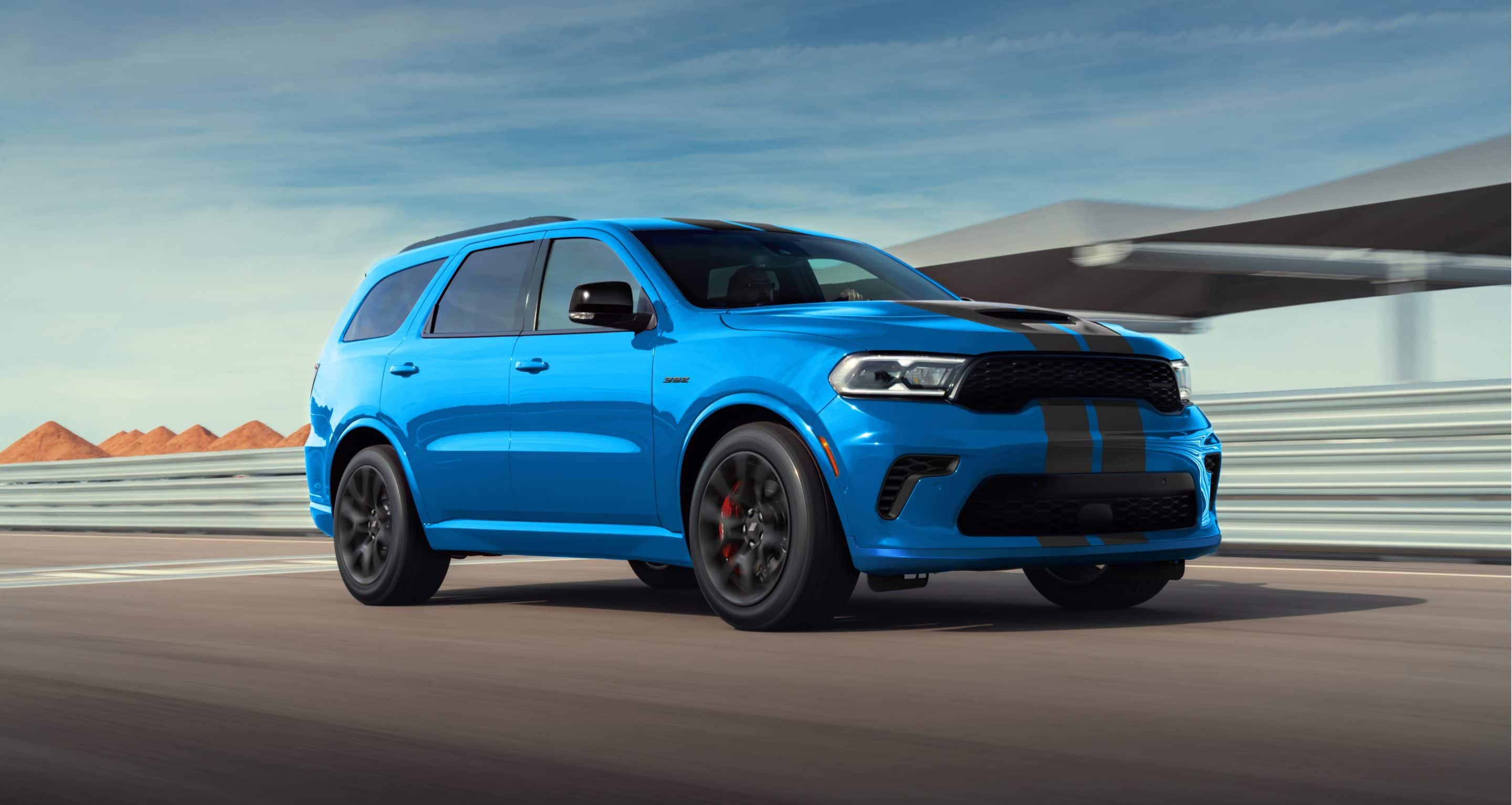
Photo Credit: Dodge
Understanding the Dodge Durango fuel economy starts with recognizing how this muscle SUV balances everyday efficiency with full-size utility. Equipped with a generous 24.6-gallon fuel tank, the Dodge Durango offers an impressive driving range that can reach up to nearly 500 miles on a single fill-up. Drivers seeking maximum gas mileage will want to target the baseline 3.6L Pentastar V6 engine, which delivers an EPA-estimated 18 to 19 MPG city and 25 to 26 MPG highway depending on drive configuration. Even when upgrading to powerful HEMI V8 configurations, efficiency technology like variable valve timing and cylinder deactivation helps keep fuel consumption under control during long highway cruises.
Dodge Durango Performance Specs
Under the hood, the Dodge Durango offers four distinct powertrains tailored to different performance demands. Every engine comes paired with a smooth TorqueFlite 8-speed automatic transmission that optimizes power transfer and gear selection whether you are accelerating onto the highway or hauling heavy equipment. From daily commuting efficiency to best-in-class towing capacity, the Durango delivers a sports-car attitude in a spacious three-row setup.
- 3.6L Pentastar V6: Up to 295 hp and 260 lb-ft of torque | Towing up to 6,200 lbs
- 5.7L HEMI V8: 360 hp and 390 lb-ft of torque | Towing up to 8,700 lbs (with Tow ‘n Go package)
- 6.4L HEMI SRT V8: 475 hp and 470 lb-ft of torque | Towing up to 8,700 lbs
- Supercharged 6.2L HEMI V8 (SRT Hellcat): 710 hp and 645 lb-ft of torque | 0–60 mph in 3.5 seconds
3 Steps for Going the Distance
Maximizing your Dodge Durango MPG in real-world driving comes down to smart habits and taking full advantage of the vehicle’s onboard technology. Follow these three steps to get the most miles out of every tank:
1.1. Utilize Eco Mode:Daily Driving.
Activate the Durango’s Eco Mode setting to immediately adjust engine throttle response and transmission shift schedules, prioritizing optimal fuel savings over rapid acceleration.
2.2. Maintain Steady Highway Speeds:Cruising Range.
Engage adaptive cruise control during long highway trips to keep speed consistent. This allows the cylinder deactivation system on HEMI models to seamlessly drop down to four cylinders and conserve fuel.
3.3. Monitor Tire Pressure & Scheduled Service:Preventative Care.
Keep tires inflated to manufacturer specifications and stick to routine oil changes. Proper tire inflation reduces rolling resistance, directly improving overall fuel economy.
Visit Vision Dodge Chrysler Jeep Ram
When you are ready to explore the Dodge Durango fuel economy at Vision Dodge Chrysler Jeep Ram in person, our expert sales team is here to guide you through every trim level, powertrain option, and current special offer.
More from Vision Dodge Chrysler Jeep Ram
Chrysler Pacifica Interior Offers Massive Family Space
Photo Source/Copyright: Chrysler Minivans don’t always get the cool points they deserve, but anyone who has ever tried cramming three kids, sports gear, and grocery bags into a midsize crossover knows the struggle. When you step into a Chrysler Pacifica inside at Vision Dodge Chrysler Jeep Ram, the pure utility quickly outweighs any…
What to Expect From Jeep Compass Latitude
Photo Source/Copyright: JEEP The Jeep Compass Latitude: What to Expect Finding a daily driver that handles sudden weather changes without feeling like an oversized tank usually leads buyers straight to the compact SUV segment. Among the available trim options, the Jeep Compass Latitude sits in a practical sweet spot for buyers shopping at Vision…
How The Ram Truck App Simplifies Daily Driving
Photo Credit: Ram Explore the Benefits of Downloading The Ram Remote Start App If you’ve recently picked up a new truck, you might be asking yourself: what does the Ram app do to actually make daily driving easier? Instead of being just another gimmick on your phone, the app acts as a remote command center…